
Our story / Civil Estimating Academy
A career I didn’t
know existed.
From the construction field to the estimating desk. From experience passed between colleagues to a clearer way to learn.
I didn’t grow up planning to become an estimator. I didn’t even know the job existed.
I was working on an ambulance, and the pay wasn’t great. On my days off, I started working for my friend’s father’s construction company. After several years in the field, someone asked if I wanted to learn estimating.
I decided to give it a try.

Finding the
right career.
I started estimating in 2012. It didn’t take long to realize I loved it—and that I was good at it.
The work fits how my brain likes to operate: working through information, understanding how the pieces connect and figuring out what a project needs. It gave my construction experience a different purpose.
“In all those years, I’ve never been the guy watching the clock, waiting for work to end. Usually, I’m checking whether I have enough time left to finish what I’m working on.”
Mark Phillips
Estimating became a career I hadn’t known to look for. That stayed with me: how many other people might enjoy this work, if they knew it was an option?
Seeing a
bigger problem.
Over the past several years, I noticed more recruiters reaching out and more competitive offers for experienced estimators. I also saw experienced people retiring and companies finding it difficult to replace their knowledge. Those are my observations from the industry—not a promise about anyone else’s job prospects.
There are estimating courses, construction-management programs and software classes. What can be harder to find is a structured way into the detailed, day-to-day workflow of a particular estimating discipline.
Much of that knowledge is passed from one estimator to another: through employer training, mentorship, field experience and repetition. That learning matters. But experienced estimators are also working toward bid deadlines. Teaching someone well takes time.
03 / A shared idea
When the pieces
came together.
The idea became much clearer when I talked it through with Kara.
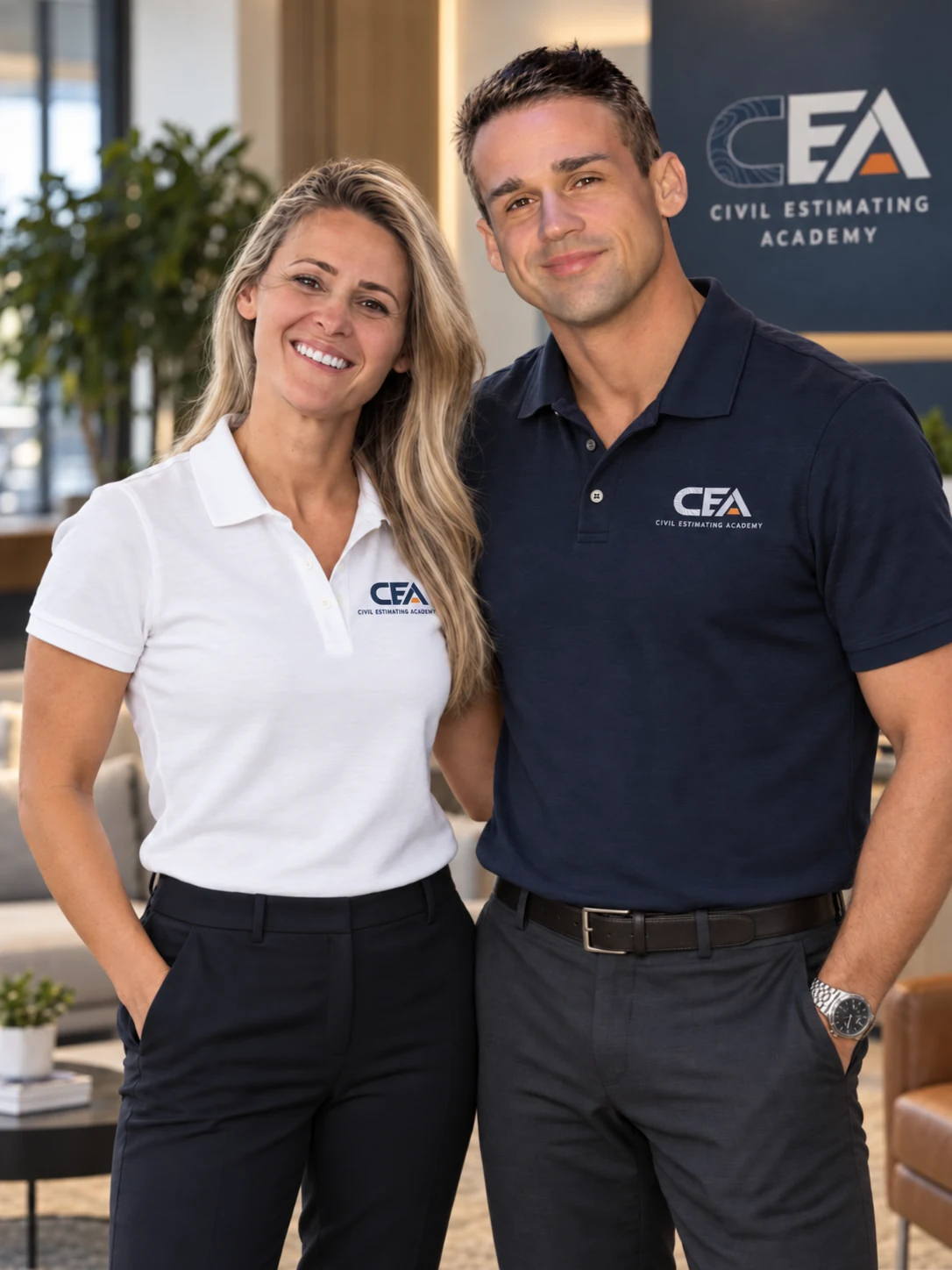
Kara Haeffner is my younger sister, a CEA co-owner and an education professional. She brings a different kind of experience: designing how people learn.
With a master’s degree in Education, Kara began teaching high school in Arizona before moving into instructional design, training development, process systems and eLearning.
She also co-leads Instructive Edge with Dakota Haeffner. The firm works in workforce training and process documentation—turning complex operational knowledge into structured systems people can use.
I understood the estimating work. Kara understood how to turn knowledge into structured learning. Together, we saw a way to make the path easier to find and more deliberate to follow.
04 / The people behind the work
Two different areas of expertise.
One shared purpose.
Civil estimating / Contractor-side experience
Mark Phillips
Co-Founder & Senior Civil Estimator
Mark brings the practical estimating perspective: understanding project documents, developing quantities, identifying scope, recording assumptions and reviewing the work before a bid moves forward.
Education / Instructional design
Kara Haeffner
Co-Owner & Instructional Design Lead
Kara brings professional learning design: clear objectives, an intentional sequence, supported practice and opportunities to demonstrate understanding. Her expertise helps shape how CEA is being built.
Civil Estimating Academy combines both: knowledge from the work, shaped into a practical way to learn it.
05 / Why we built CEA
Make the career visible.
Make the learning practical.
CEA is being built for people starting from different places: complete beginners, field professionals moving into estimating and junior estimators strengthening their skills.
Our focus is commercial civil and sitework estimating. We connect realistic project documents with practice, explanations and checks—so learners can develop skills they can explain and demonstrate.
You do not need a four-year degree to begin learning with CEA. Employer requirements vary, and training does not guarantee employment. Our purpose is to offer a focused learning pathway and help contractors develop future estimating talent.
Civil Estimating Foundations is coming soon. Enrollment is not open. Its introductory scope and completion requirements remain distinct from future specialist programs and professional credentials.
Real Projects. Real Skills. Real Estimating.